

August 24, 2026 · RiseFrst
5 Best Alarm Clocks for Deep Sleepers (2024 Reviews)
Stop hitting snooze. Discover the best alarm clock for deep sleepers, from mission-based apps to vibrating devices. Find your perfect wake-up solution today.
5 Best Alarm Clocks for Deep Sleepers That Actually Get You Out of Bed
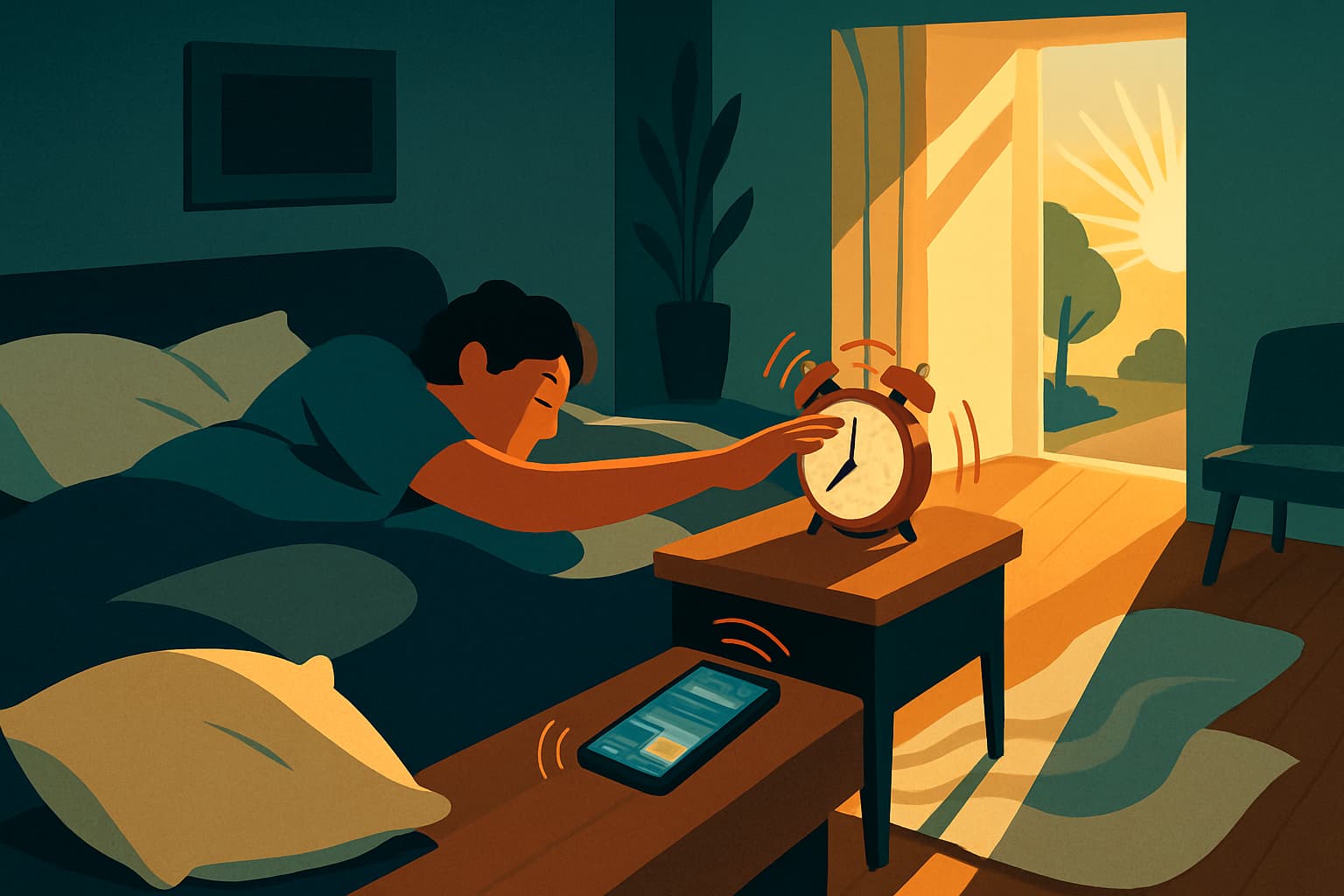
If you're a deep sleeper, you already know the frustration. The alarm goes off, your hand reaches out on autopilot, you hit snooze, and suddenly it's 45 minutes later. You're rushing, stressed, and starting your day behind schedule—again. Traditional alarm clocks simply weren't designed for people who can sleep through sirens, multiple alarms, or even the persistent buzzing of a smartphone.
The good news? The right alarm clock for deep sleepers can transform your mornings from chaotic to consistent. Whether you need physical movement to wake up, challenging mental tasks, gradual light stimulation, or a combination of loud sounds and vibrations, today's solutions go far beyond beeping you awake. This guide reviews five proven alarm solutions specifically designed to help heavy sleepers break the snooze cycle and start building the consistent morning routine they've been chasing.
Comparison of the Top Alarm Clocks for Deep Sleepers
| Tool | Best for | Standout feature | Starting price |
|---|---|---|---|
| RiseFrst | iPhone users struggling with oversleeping, hitting snooze, or establishing productive morning habits, seeking a structured and motivating solution to improve consistency and momentum in their daily start. | iPhone alarm app | — |
| Alarmy | Deep sleepers who need extreme measures to prevent snoozing and ensure they get up. | Diverse and challenging 'missions' (e.g., math problems, photo verification, barcode scanning) to dismiss the alarm. | Free with premium subscription options |
| Sleep Cycle | Individuals who want to wake up feeling less groggy and more refreshed by optimizing their wake-up time. | Intelligent alarm that wakes you during your lightest sleep phase using sound analysis. | Free with premium subscription options |
| Philips SmartSleep Sleep and Wake-up Light | Those who prefer a natural, gradual awakening process over jarring alarms, especially sensitive sleepers. | Sunrise simulation that gradually brightens to prepare your body for waking. | Around $99-$180 (one-time purchase for the device) |
| Sonic Bomb Alarm Clock | Extremely deep sleepers, individuals with hearing impairments, or anyone who absolutely cannot afford to miss an alarm. | Combination of an extra-loud alarm (up to 113 dB), a vibrating bed shaker, and flashing lights for multi-sensory awakening. | Around $35-$45 (one-time purchase for the device) |
Why Deep Sleepers Need More Than a Standard Alarm
Deep sleep is actually a sign of healthy rest—your body cycles through lighter and deeper stages throughout the night. The challenge comes when you're in deep sleep during your wake-up time. Your brain is less responsive to external stimuli, which means a standard alarm simply doesn't register with the same urgency it would for lighter sleepers.
Beyond biology, habit plays a massive role. If you've trained yourself to hit snooze without fully waking, you've created a neural pathway that activates before conscious thought. Your hand finds the phone, taps the screen, and you're asleep again before you've even opened your eyes. Breaking this pattern requires more than willpower—it requires a system that forces engagement.
That's where specialized alarm solutions come in. The most effective options for deep sleepers share common traits: they require physical movement, mental engagement, or sensory stimulation that's impossible to ignore. They transform waking up from a passive experience into an active one, giving your brain no choice but to engage.
How to Choose the Right Alarm Clock for Your Sleep Style
Not all deep sleepers are the same, and the best alarm clock for you depends on your specific challenges and preferences. Consider these key factors:
Your snooze pattern: Do you hit snooze once or repeatedly? If you're a serial snoozer, you need a solution that either prevents snoozing entirely or makes each snooze progressively harder to activate.
Your living situation: Roommates, partners, or thin walls might make an extremely loud alarm impractical. In shared spaces, vibrating options or apps that require you to physically move to another room work better than sonic blast devices.
Your wake-up goals: Are you just trying to get out of bed, or do you want to build an entire morning routine? Some solutions stop at waking you; others help you maintain momentum through the first critical hour of your day.
Your technology preferences: iPhone users have access to sophisticated alarm apps with mission-based features. If you prefer standalone devices, physical alarm clocks with bed shakers or light simulation offer reliability without smartphone dependency.
Your sensitivity to light and sound: Some people respond better to gradual, gentle stimulation; others need aggressive, immediate intervention. Understanding your sensory preferences helps narrow down the approach that will actually work for you.
The right choice combines effectiveness with sustainability. An alarm that works once but feels so unpleasant you disable it by day three isn't a solution—it's a temporary disruption. Look for options that feel challenging but manageable, creating just enough friction to wake you without making mornings miserable.
RiseFrst: Mission-Based Alarms That Build Morning Momentum
RiseFrst takes a comprehensive approach to the deep sleeper problem by addressing not just waking up, but what happens after. This iPhone alarm app combines mission-based alarms with morning routine building and progress tracking, creating a complete system for consistent mornings.
The mission-based alarm requires you to complete a specific task—like taking a photo of a designated location in your home—before the alarm will turn off. This forces physical movement and conscious engagement, making it virtually impossible to snooze from bed. But RiseFrst goes beyond just getting you vertical.
Once you're up, the app guides you through your planned morning routine, helping you maintain the momentum you created by getting out of bed. You can structure different alarm setups for weekdays versus weekends, or create focused morning configurations for specific goals. The progress and streak tracking provides visible accountability, showing you exactly how consistent you've been and motivating you to maintain your momentum.
Strengths:
- Mission-based alarms prevent automatic snoozing
- Integrated routine builder helps you follow through after waking
- Progress tracking creates accountability and motivation
- Flexible scheduling for different days and goals
- Built specifically for iPhone users with iOS optimization
Considerations:
- iPhone-only availability
- Requires commitment to setting up missions and routines
- Most effective when you genuinely engage with the routine-building features
For iPhone users who want to transform their entire morning—not just escape the bed—RiseFrst offers the structure and motivation to build lasting change.
Alarmy: The Alarm Clock That Makes You Solve to Snooze
Alarmy has built its reputation on one core principle: make the alarm impossible to dismiss without genuine wakefulness. This app offers perhaps the most diverse collection of wake-up missions available, each designed to force your brain into active problem-solving mode.
The photo mission requires you to take a picture matching one you registered (like your bathroom sink or kitchen coffee maker), ensuring you physically leave the bedroom. The math mission presents increasingly difficult equations that demand mental engagement. The barcode mission sends you to scan a specific product's barcode, while the step mission requires you to walk a certain number of steps before the alarm silences.
Each mission type addresses a different aspect of the waking challenge. If your problem is physical inertia, photo and step missions force movement. If you can walk while still half-asleep, math missions engage your prefrontal cortex. You can even combine multiple missions for maximum effectiveness.
Strengths:
- Extremely diverse mission options for different wake-up challenges
- High customization for difficulty levels
- Available on both iOS and Android
- Strong track record with deep sleepers who need aggressive intervention
- Free version includes core mission features
Considerations:
- Can feel punishing if missions are set too difficult
- Focuses primarily on waking up rather than post-wake routines
- Some users report habituation over time if using the same mission repeatedly
Alarmy excels at solving the immediate problem: getting you out of bed when nothing else works. It's particularly effective for those who need variety and increasing challenges to stay engaged.
Sleep Cycle: Smart Alarm Clock & Sleep Tracker
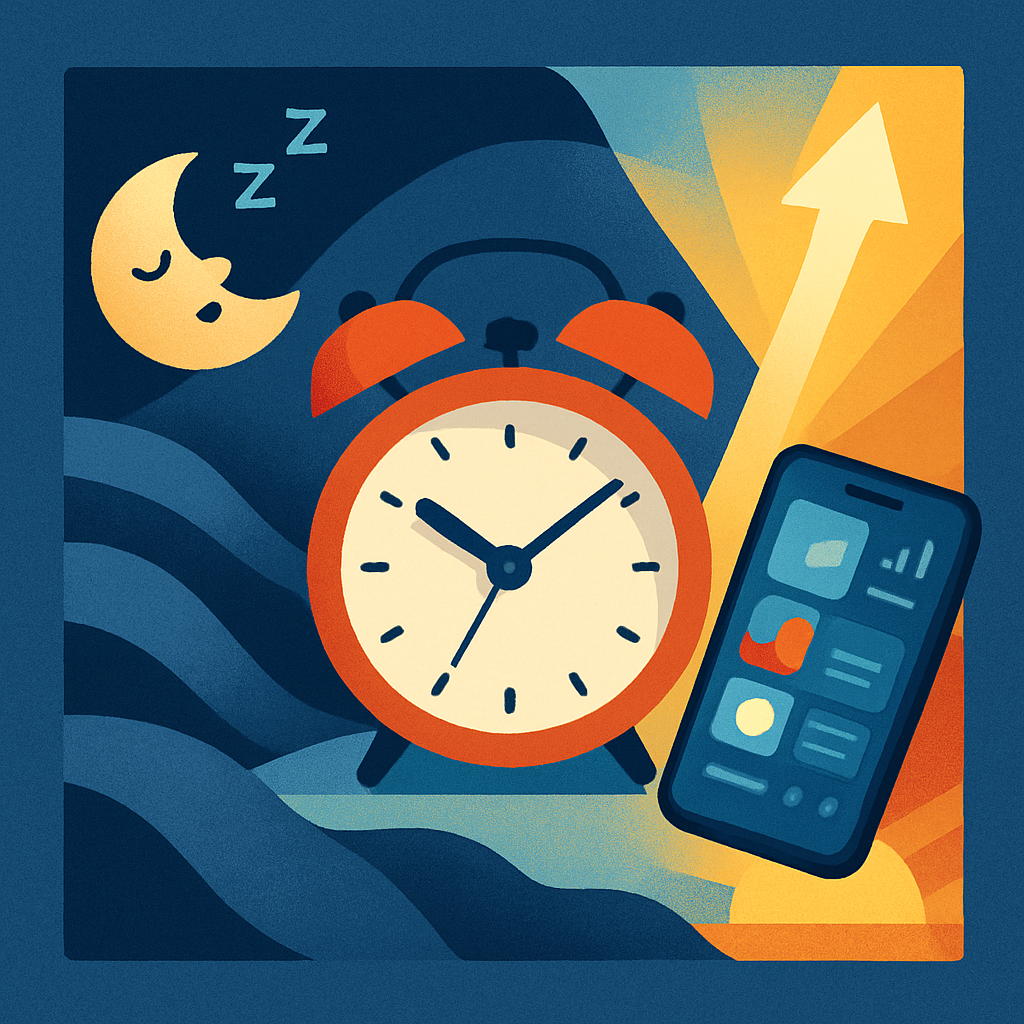
Sleep Cycle approaches the deep sleeper problem from a different angle. Rather than forcing you awake at a specific time, it analyzes your sleep patterns using sound analysis and wakes you during your lightest sleep phase within a customizable window.
The science behind Sleep Cycle recognizes that waking from deep sleep feels significantly worse than waking from light sleep. By monitoring your movement and sounds throughout the night, the app identifies when you're naturally transitioning between sleep stages. When your alarm window opens, it waits for an optimal moment—when you're in lighter sleep—to wake you, making the transition from sleep to wakefulness feel more natural.
Beyond the intelligent alarm, Sleep Cycle provides comprehensive sleep analysis, tracking your sleep quality, patterns, and consistency over time. You can identify correlations between your habits and sleep quality, make adjustments, and measure improvement. The app integrates with Apple Health and offers gentle wake-up sounds designed to ease you into consciousness.
Strengths:
- Waking during light sleep reduces grogginess
- Comprehensive sleep tracking provides insight into patterns
- Gentle, natural wake-up experience
- Works well for consistent sleepers who wake within a predictable window
- Snore detection and analysis included
Considerations:
- Requires consistent sleep schedule for best results
- May not be aggressive enough for extremely deep sleepers
- Phone must be placed near the bed for accurate sound analysis
- Less effective if you need to wake at a precise, non-negotiable time
Sleep Cycle works best for deep sleepers whose main issue is grogginess rather than difficulty waking. If you can wake with a standard alarm but feel terrible for hours afterward, optimizing your wake-up timing might be the missing piece.
Philips SmartSleep Sleep and Wake-up Light: Gentle Awakening with Light
The Philips SmartSleep Sleep and Wake-up Light uses your body's natural response to light as the primary wake mechanism. Over 30 minutes before your set wake time, the device begins simulating a sunrise, gradually increasing light intensity from soft dawn colors to bright daylight.
This gradual approach works with your circadian rhythm rather than against it. Light exposure—particularly in the blue spectrum—suppresses melatonin production and signals to your brain that it's time to wake. By the time the light reaches full brightness, your body has been preparing to wake for half an hour, making the transition significantly easier.
The device includes multiple natural wake-up sounds (birds chirping, ocean waves, forest sounds) that begin playing at your set time, providing an audio component for those who need it. You can also use it as a bedside reading light and leverage the sunset simulation feature to wind down at night, creating consistent light-based signals for both ends of your sleep cycle.
Strengths:
- Natural, gradual awakening feels less jarring
- Works with circadian biology rather than against it
- Dual function as wake-up and wind-down tool
- Effective for seasonal affective disorder symptoms
- No smartphone required once configured
Considerations:
- Higher upfront cost than app-based solutions
- Requires sleeping in a dark room for maximum effectiveness
- May not be sufficient alone for extremely deep sleepers
- Light can disturb sleeping partners in shared beds
The Philips SmartSleep works exceptionally well as part of a layered approach. Many deep sleepers use it as their primary alarm with a backup alarm set for absolute certainty, or combine it with a mission-based app alarm for a gentler initial wake followed by a movement requirement.
Sonic Bomb Alarm Clock: The Loudest Wake-Up Call
When subtlety has failed and you need overwhelming sensory input, the Sonic Bomb Alarm Clock delivers. This device combines three powerful wake mechanisms: an alarm that reaches 113 decibels (roughly equivalent to a rock concert), a powerful bed shaker that vibrates under your pillow or mattress, and pulsating alert lights.
The multi-sensory approach ensures that even if you can somehow sleep through extreme noise, the physical vibration will penetrate your consciousness. Originally designed for individuals with hearing impairments, the Sonic Bomb has found an enthusiastic audience among deep sleepers who have literally slept through fire alarms.
You can customize the alarm to use sound only, vibration only, or both simultaneously. The tone and volume are adjustable (though even the minimum settings are quite loud), and you can set snooze duration anywhere from 1 to 30 minutes. Battery backup ensures you won't oversleep even during power outages, and dual alarm settings let you configure different times for different days.
Strengths:
- Extremely difficult to sleep through multiple sensory inputs
- Reliable standalone device with battery backup
- Highly adjustable to find the right intensity
- One-time purchase with no subscription costs
- Proven effective for profound deep sleepers
Considerations:
- Very disruptive to sleeping partners or roommates
- No smart features or routine integration
- Can be startling or stressful as a wake method
- Neighbors in apartments might complain about noise
The Sonic Bomb is the emergency option—the solution when everything else has genuinely failed. It's particularly valuable for people who absolutely cannot afford to oversleep (shift workers, those with long commutes, critical morning commitments) and need a guarantee that they'll wake.
Building Consistent Morning Habits Beyond the Alarm
Getting out of bed is the first victory, but lasting change comes from what you do in the following 30 to 60 minutes. An alarm clock for deep sleepers solves the immediate wake problem; a morning routine solves the consistency problem.
Once you're vertical, momentum is your advantage. Your body is already in motion, and your mind hasn't fully engaged its resistance mechanisms. This is the window to stack positive behaviors that set the tone for your entire day.
Start simple. Identify one non-negotiable habit that happens immediately after your alarm mission. For many people, this is hydration—drinking a full glass of water signals to your body that the day has begun. Others move directly into movement: a quick walk, stretching, or exercise while discipline is still strong.
Using an iPhone alarm app with mission-based alarms that includes routine tracking helps tremendously during this formation period. The app doesn't just wake you—it guides you through the sequence you've committed to, maintaining structure when your willpower is weakest. Seeing your streak grow day after day creates powerful motivation to protect your consistency.
The key is connection: link each habit to the next with minimal decision points. Alarm completes → bathroom → water → dressed → coffee → morning routine. When behavior A automatically triggers behavior B, you remove the friction where old snoozing patterns used to live.
Track your progress visibly. Whether through an app, a wall calendar, or a simple notebook, marking each successful morning creates accountability and shows you the momentum you're building. After two weeks of consistency, the routine begins feeling normal. After 30 days, it starts feeling automatic. After 90 days, it's who you are.
Conclusion
Finding the right alarm clock for deep sleepers isn't about buying the loudest device or downloading the trendiest app—it's about matching a solution to your specific wake-up challenges and committing to the system.
For iPhone users seeking comprehensive morning transformation, RiseFrst combines mission-based wake-ups with routine building and progress tracking. If you need maximum mission variety and aggressive intervention, Alarmy offers diverse challenges that force genuine wakefulness. Those who want to optimize their wake timing and reduce grogginess will find value in Sleep Cycle's intelligent approach. The Philips SmartSleep provides natural, light-based awakening for people who respond well to gradual stimulation. And when nothing else works, the Sonic Bomb delivers unmissable sensory overload.
The best choice is the one you'll actually use consistently. Start with the solution that addresses your primary challenge, give it a genuine two-week trial, and adjust from there. Remember that the alarm is just the beginning—lasting change comes from building the morning routine that follows, protecting your momentum, and proving to yourself day after day that you can wake up on time and start strong.
Your mornings don't have to be a battle. With the right tools and consistent effort, you can transform oversleeping from a daily struggle into a solved problem.
Frequently Asked Questions
What makes an alarm clock effective for deep sleepers?
Effective alarm clocks for deep sleepers require active engagement rather than passive dismissal. Look for features like mission-based tasks (photo verification, math problems, physical movement), multiple sensory inputs (sound, vibration, light), or smart timing that wakes you during lighter sleep phases. The key is creating enough friction that you can't snooze on autopilot.
Can I train myself to be a lighter sleeper?
While your baseline sleep depth is largely biological, you can improve wake-up consistency through habit formation. Using the same alarm method daily, maintaining a consistent sleep schedule, getting adequate sleep, and creating a compelling reason to wake (a morning routine you enjoy) all make waking easier over time. The goal isn't changing your sleep depth but building reliable wake systems.
Should I use multiple alarms or just one strong alarm?
For deep sleepers, multiple alarms often reinforce snooze habits—you learn to ignore the first several because you know backups exist. A single, non-negotiable alarm that requires meaningful engagement (like completing a mission) typically works better. If you need a backup for peace of mind, set it 30+ minutes after your primary alarm, not in 5-minute increments.
How long does it take to break the snooze habit?
Most people see significant improvement within 2-3 weeks of consistently using an effective alarm system and not allowing themselves to snooze. The first week feels difficult, the second week feels manageable, and by the third week, your body begins adjusting to the new pattern. Complete habit reformation typically takes 60-90 days of consistency.
What should I do immediately after waking to stay awake?
The critical window is the first 5-10 minutes. Expose yourself to bright light, drink water, move your body (even just walking to another room), and engage your mind with your alarm mission or first morning task. Creating physical and mental distance from your bed before your brain can negotiate going back to sleep is essential for breaking the snooze cycle.
Ready to stop hitting snooze and start building unstoppable morning momentum? Download RiseFrst and experience how mission-based alarms and routine tracking can transform your mornings from chaotic to consistent.