

August 28, 2026 · RiseFrst
5 Proven Ways to Stop Hitting Snooze (and How RiseFrst Helps)
Discover 5 proven strategies to stop hitting snooze and transform your mornings. Learn how mission-based alarms help build consistent wake-up habits.
5 Proven Ways to Stop Hitting Snooze (and How RiseFrst Helps)
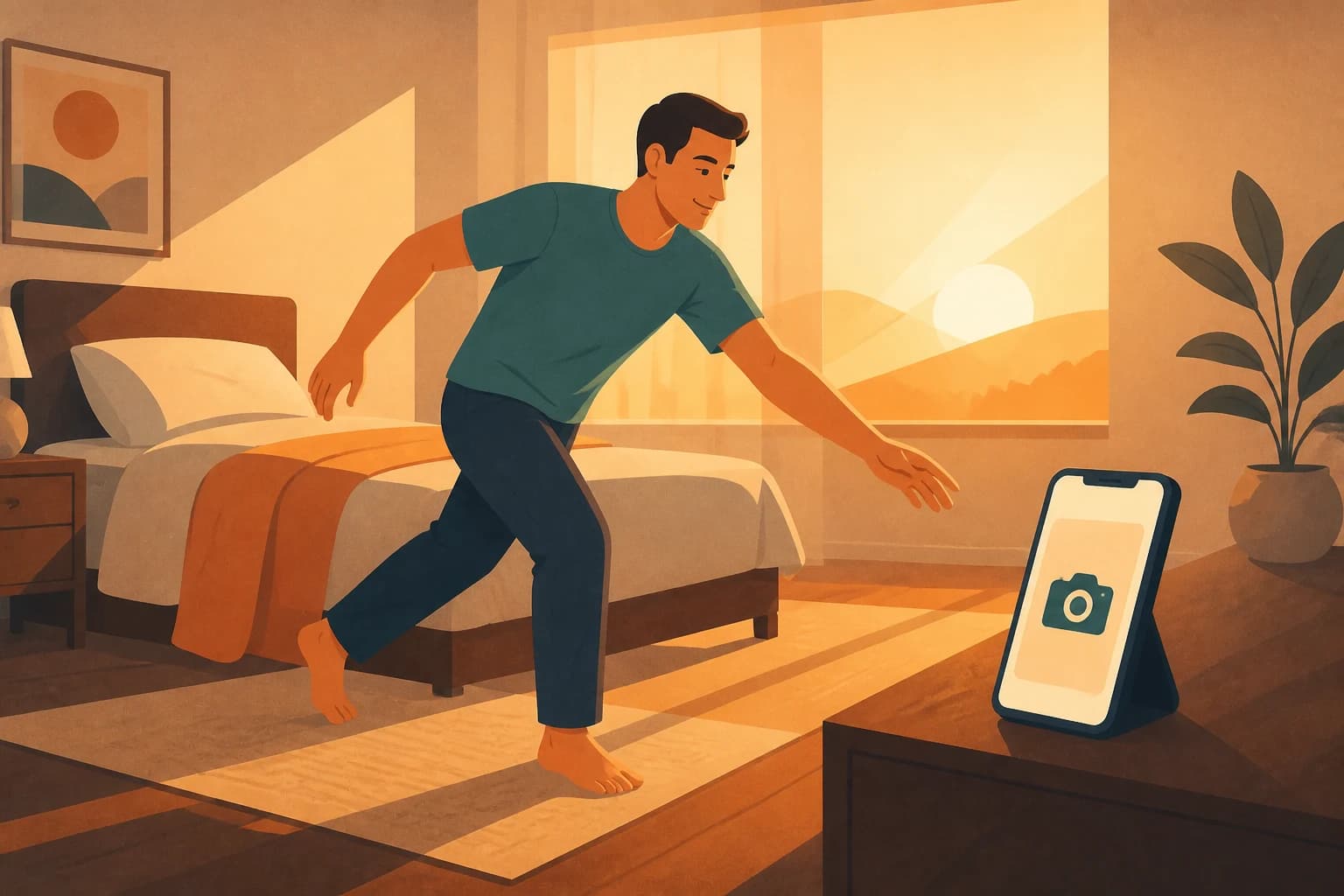
You reach for your phone in the dark, squinting at the screen. Just five more minutes. Then another five. Before you know it, you've hit snooze three times, you're running late, and your entire morning feels rushed and chaotic. Sound familiar?
The snooze button habit affects millions of iPhone users who genuinely want to start their days earlier and stronger. You're not lazy—you're fighting against ingrained patterns that your brain has learned to protect. The good news? Breaking the snooze cycle isn't about willpower alone. It's about understanding why we snooze, then implementing practical systems that make getting up the easier choice.
In this guide, you'll discover five research-backed strategies to stop hitting snooze for good. More importantly, you'll learn how to build the kind of consistent morning momentum that transforms not just your wake-up time, but your entire day. Whether you're trying to reclaim time for exercise, establish a peaceful morning routine, or simply arrive at work feeling prepared instead of frazzled, these methods will help you make that first alarm the only one you need.
The Snooze Trap: Why Those Extra Minutes Are Harming Your Mornings
Those "just a few more minutes" are costing you more than time. When you hit snooze, you're fragmenting your sleep into short, low-quality segments. Your body begins a new sleep cycle it can't complete, leaving you groggier than if you'd simply gotten up with the first alarm. This phenomenon, called sleep inertia, makes each subsequent wake-up harder, not easier.
Beyond the physical effects, snoozing creates a pattern of starting your day by breaking a promise to yourself. Your very first decision is to delay, postpone, and choose short-term comfort over your stated goals. This sets a psychological tone that can undermine your productivity and self-confidence throughout the day.
The habit also steals the opportunity for a calm, intentional morning. Instead of having time to ease into your day with activities that energize and center you, you're scrambling to catch up from the moment your feet hit the floor. The stress compounds, making tomorrow morning's alarm even less appealing.
Beyond the Alarm: Understanding the Psychology of Waking Up
Breaking the snooze habit requires understanding what's actually happening in your half-asleep brain. When your alarm goes off, you're making a split-second decision in a state where your prefrontal cortex—responsible for long-term thinking and willpower—is barely online. Meanwhile, the parts of your brain seeking immediate comfort are fully engaged.
This isn't a fair fight. You're essentially asking your sleepy self to defeat your evolutionary programming for rest and warmth based purely on good intentions set the night before. Without changing the equation, willpower alone will fail most mornings.
The solution lies in removing the decision entirely. Instead of relying on your groggy self to make the right choice, you need systems that make getting up the only viable option. This shifts the challenge from motivation to mechanics—and mechanics are far more reliable.
1. Optimize Your Sleep Environment and Bedtime Routine
The most effective way to stop hitting snooze starts before you even set your alarm: get enough quality sleep. When you're genuinely well-rested, your body naturally resists the urge to延 fight waking up as intensely.
Start by establishing a consistent bedtime that allows for 7-9 hours of sleep. Your circadian rhythm thrives on consistency, so try to keep the same sleep schedule even on weekends, varying by no more than an hour.
Create a wind-down routine 30-60 minutes before bed. Dim the lights, reduce screen time (or use night mode on your iPhone), and engage in calming activities like reading or light stretching. This signals to your body that sleep is approaching, improving both the speed at which you fall asleep and the quality of rest you get.
Optimize your sleep environment for darkness, quiet, and cool temperatures (around 65-68°F is ideal for most people). Blackout curtains, white noise machines, or even a simple sleep mask can dramatically improve sleep quality, making morning wake-ups feel less punishing.
When you're properly rested, the snooze button loses much of its appeal because you're not desperately seeking the sleep your body actually needs.
2. Place Your Phone Across the Room (And Make It Worth Getting Up For)
The physical barrier method is simple but effective: if your iPhone isn't within arm's reach, you must physically get out of bed to silence it. This single change eliminates the unconscious, semi-awake snooze tap that happens before you're even fully aware.
But here's where most people fail with this strategy: they turn off the alarm, then dive right back into bed. The act of getting up needs to transition into staying up.
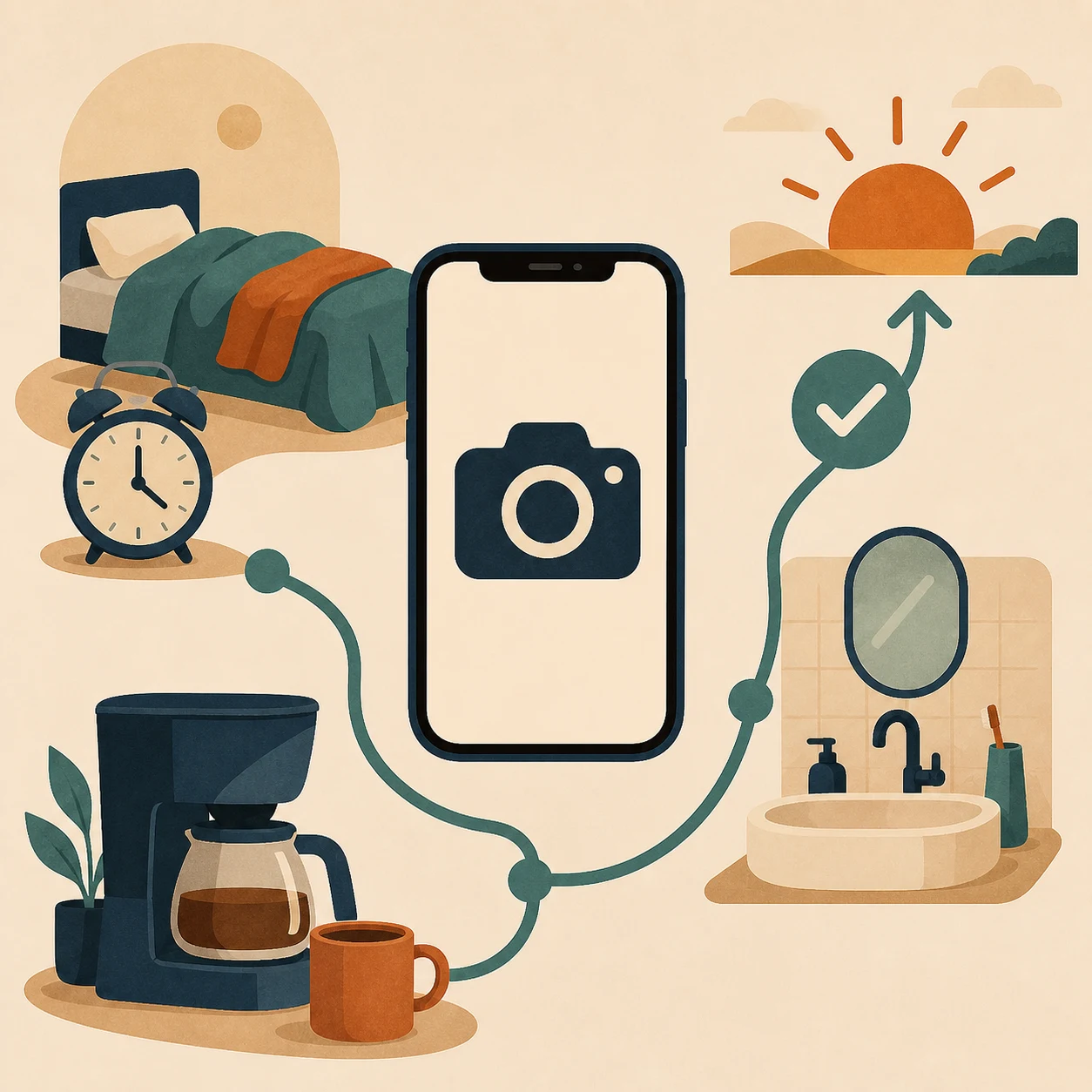
This is where mission-based alarms become game-changing. Instead of simply turning off an alarm, you're required to complete an engaging task that activates your brain and body. Taking a photo of your coffee maker, bathroom mirror, or even stepping outside to photograph your front door accomplishes two things: it gets you moving to specific locations, and it requires enough cognitive engagement to bring you closer to full wakefulness.
By the time you've walked to another room and completed your morning mission, you've broken the gravitational pull of your bed. You're up, you're moving, and returning to sleep now requires a conscious decision rather than an automatic response.
3. Create an Irresistible Morning Mission
The best alarm systems don't just wake you—they give you an immediate, compelling reason to stay awake. Your morning mission should be something that engages you mentally or physically enough to shift your brain from sleep mode to active mode.
For iPhone users, photo-based tasks work exceptionally well because they require multiple actions: grabbing your phone, moving to a location, framing the shot, and capturing the image. This multi-step process engages different parts of your brain and gets your body in motion.
Choose mission locations strategically. Your bathroom makes you confront your morning routine. Your kitchen triggers thoughts of breakfast or coffee. Outside your front door gives you fresh air and natural light, both powerful wake-up signals.
The beauty of the RiseFrst approach is that your alarm literally won't turn off until you complete your chosen mission. There's no snooze button to hit, no way to postpone—you've created a system where the path of least resistance is to get up and get moving.
Rotate your missions to prevent habituation. If your brain learns to complete the task on autopilot, it loses effectiveness. Change locations periodically, or create different missions for different days of the week.
4. Build Accountability Through Streak Tracking
Humans are remarkably motivated by not wanting to break a winning streak. This psychological principle, used effectively in everything from fitness apps to language learning, can be your secret weapon against the snooze button.
When you track consecutive days of successful wake-ups, each morning becomes easier because you're protecting something valuable: your streak. The longer your streak grows, the more you have to lose, creating a powerful motivator that works even when willpower is low.
Progress tracking transforms your wake-up routine from a daily struggle into a game with visible rewards. You can see your consistency building over time, which reinforces the identity shift from "someone who struggles to wake up" to "someone who shows up for themselves every morning."
This approach taps into the psychological concept of commitment and consistency. Once you've established a pattern of successful mornings, your brain starts to see this as part of who you are. Breaking the pattern feels like a violation of your self-image, creating internal resistance to hitting snooze.
Celebrate milestones: your first week without snoozing, two weeks, a month. These markers provide motivation peaks that carry you through the inevitable mornings when getting up feels particularly difficult. Your track record becomes evidence that you can do this, even when it's hard.
5. Design a Morning Routine That Pulls You Out of Bed
The minutes immediately after your alarm determine whether you'll stay up or drift back to sleep. A well-designed morning routine creates forward momentum that makes returning to bed increasingly unlikely with each completed step.
Start with your non-negotiable anchor habit—something simple you do every single day, no matter what. This might be drinking a full glass of water, doing two minutes of stretching, or stepping outside for fresh air. The key is making it easy enough that you'll do it even on your worst mornings.
Stack additional habits onto this anchor, creating a sequence that gradually increases in complexity and engagement. Water → bathroom → coffee → five-minute journal, for example. Each completed step activates you further and creates psychological momentum.
Your routine should include elements you genuinely look forward to, not just obligations. Whether it's enjoying your favorite coffee blend, reading for pleasure, or listening to an inspiring podcast, build in rewards that make getting up worthwhile.
The RiseFrst morning routine builder helps you structure this sequence, ensuring you're not left wondering "what now?" after your alarm goes off. When you know exactly what comes next, decision fatigue can't sabotage your morning before it starts.
Flexibility matters too. Build different routines for different types of days—a focused weekday morning versus a more relaxed weekend routine. This prevents boredom while maintaining the consistency your body needs to regulate its wake-up response.
How RiseFrst Combines These Strategies Into One Powerful Solution
While you can implement these strategies using separate tools and sheer determination, the iPhone alarm app integrates them into a cohesive system designed specifically for people serious about stopping the snooze cycle.
The mission-based alarm system eliminates the snooze option entirely by requiring you to complete a photo task before the alarm silences. You're not fighting willpower—you're following a system that makes getting up the only path forward. Choose from various mission types and locations, customizing the difficulty based on how much help you need getting out of bed.
Built-in routine building guides you through your first critical minutes awake, creating structure when your discipline is weakest. Instead of turning off your alarm and wondering what to do next—a dangerous moment when bed becomes tempting again—you have a clear sequence of actions that build momentum.
Progress and streak tracking provide visual evidence of your growing consistency, turning each successful morning into a data point in your transformation. This isn't just about today's wake-up; it's about building proof that you're becoming someone who shows up for themselves consistently.
Flexible alarm setups acknowledge that not every day is the same. Set different alarms for weekdays versus weekends, or create focused morning configurations for days requiring extra time or energy. This prevents the one-size-fits-all approach that causes many alarm systems to fail.
The combination of these features creates multiple layers of defense against the snooze button. If one strategy doesn't fully motivate you on a particular morning, another picks up the slack. You're not relying on a single tactic—you're supported by an entire system.
From Snoozer to Early Riser: Your First Week Action Plan
Night Before Preparation:
- Set your bedtime alarm for 8 hours before your desired wake time
- Prepare your mission location (clear your bathroom counter for a clean photo, set your coffee maker timer)
- Place your iPhone across the room in airplane mode (WiFi only) to prevent late-night scrolling
- Review tomorrow's routine and your current streak
Day 1-2: Build the Foundation
- Choose one simple mission location (bathroom mirror is ideal for starters)
- Create a minimal three-step morning routine: complete mission, drink water, spend 5 minutes on something you enjoy
- Focus solely on not returning to bed for the first 15 minutes—if you can make it past that threshold, you've won
Day 3-4: Add Structure
- Introduce a second mission option for variety
- Expand your routine by one additional step
- Notice what time you naturally feel fully awake; this helps you gauge if you need earlier bedtimes
Day 5-7: Establish Consistency
- Maintain the same wake time on weekend days (you can adjust by 30-60 minutes max)
- Celebrate your first week streak—this is a genuine accomplishment
- Reflect on how your days have felt with better mornings; note any improvements in productivity, mood, or stress levels
Remember: the first week is about establishing the pattern, not perfection. If you wake up late one morning, don't abandon the entire effort. Start your streak again immediately the next day. Consistency is built one morning at a time, and each successful wake-up strengthens the habit you're creating.
Conclusion
Stopping the snooze habit isn't about having more willpower than you currently possess. It's about recognizing that willpower is unreliable in those critical moments when your alarm goes off, and building systems that work even when motivation is low.
By optimizing your sleep quality, creating physical and mental barriers to snoozing, establishing compelling reasons to get up, tracking your progress, and designing routines that create momentum, you're not fighting against yourself—you're creating conditions where success becomes the natural outcome.
The transformation from chronic snoozer to consistent early riser happens gradually, one morning at a time. But with the right tools and approach, those individual mornings accumulate into weeks, then months of the kind of consistency that genuinely changes your life. You'll reclaim time, reduce morning stress, and build the confidence that comes from showing up for yourself every single day.
Your next morning is your next opportunity. Not to be perfect, but to be consistent. Not to overhaul your entire life, but to win the first moment of your day. That's where momentum begins, and that's exactly what your future self will thank you for.
Frequently Asked Questions
How long does it take to break the snooze button habit?
Most people see significant improvement within 1-2 weeks of consistent practice. The first 3-7 days are the hardest as your body adjusts to the new pattern. After two weeks of not snoozing, the habit becomes noticeably easier. Full habit formation typically occurs around the 30-day mark, though you'll feel progress much sooner.
What if I use my iPhone for my alarm but still hit snooze unconsciously?
Unconscious snoozing happens when your alarm is within easy reach and requires minimal effort to silence. Switch to a mission-based alarm system that requires you to physically get up and complete a task like taking a photo in another room. This forces full engagement rather than allowing automatic snooze responses.
Should I use different wake-up strategies for weekends versus weekdays?
While you can allow 30-60 minutes of variation on weekends, maintaining consistent wake times (within an hour) seven days a week significantly strengthens your circadian rhythm and makes weekday waking easier. Use slightly different routines rather than different times—perhaps a more relaxed morning routine on weekends while keeping a similar wake-up time.
What's the best mission or task to require at wake-up time?
The most effective missions require both physical movement and light cognitive engagement. Photo-based tasks work well: photographing your bathroom mirror gets you out of bedroom, into light, and near your morning routine. Outside photos add fresh air and natural light. Choose locations that naturally connect to your next morning activity.
How do I stop hitting snooze when I genuinely feel exhausted every morning?
Persistent morning exhaustion despite adequate sleep time may indicate poor sleep quality, sleep disorders, or health issues worth discussing with a doctor. In the short term, focus on sleep hygiene: consistent bedtimes, dark cool room, no screens an hour before bed, and limit caffeine after 2 PM. If you're getting 7-9 hours but still exhausted, the issue isn't the alarm—it's the sleep quality or an underlying health concern.
Ready to stop hitting snooze and start building unstoppable morning momentum? Download RiseFrst today and turn your wake-up time into your first win of every day. Your consistent, energized mornings are just one alarm away.