

August 16, 2026 · RiseFrst
Photo Mission Alarm: Wake Up with RiseFrst's Photo Task
Discover how RiseFrst's photo mission alarm forces you out of bed by requiring a photo before dismissal. Build consistent mornings with purposeful movement.
Wake Up with a Snap: How RiseFrst's Photo Mission Alarm Works
You know the pattern. The alarm rings, you hit snooze, and ten minutes later the cycle repeats. Each time you promise yourself it's the last one, but your half-asleep brain makes that decision effortlessly. The problem isn't your willpower—it's that traditional alarms make snoozing too easy.
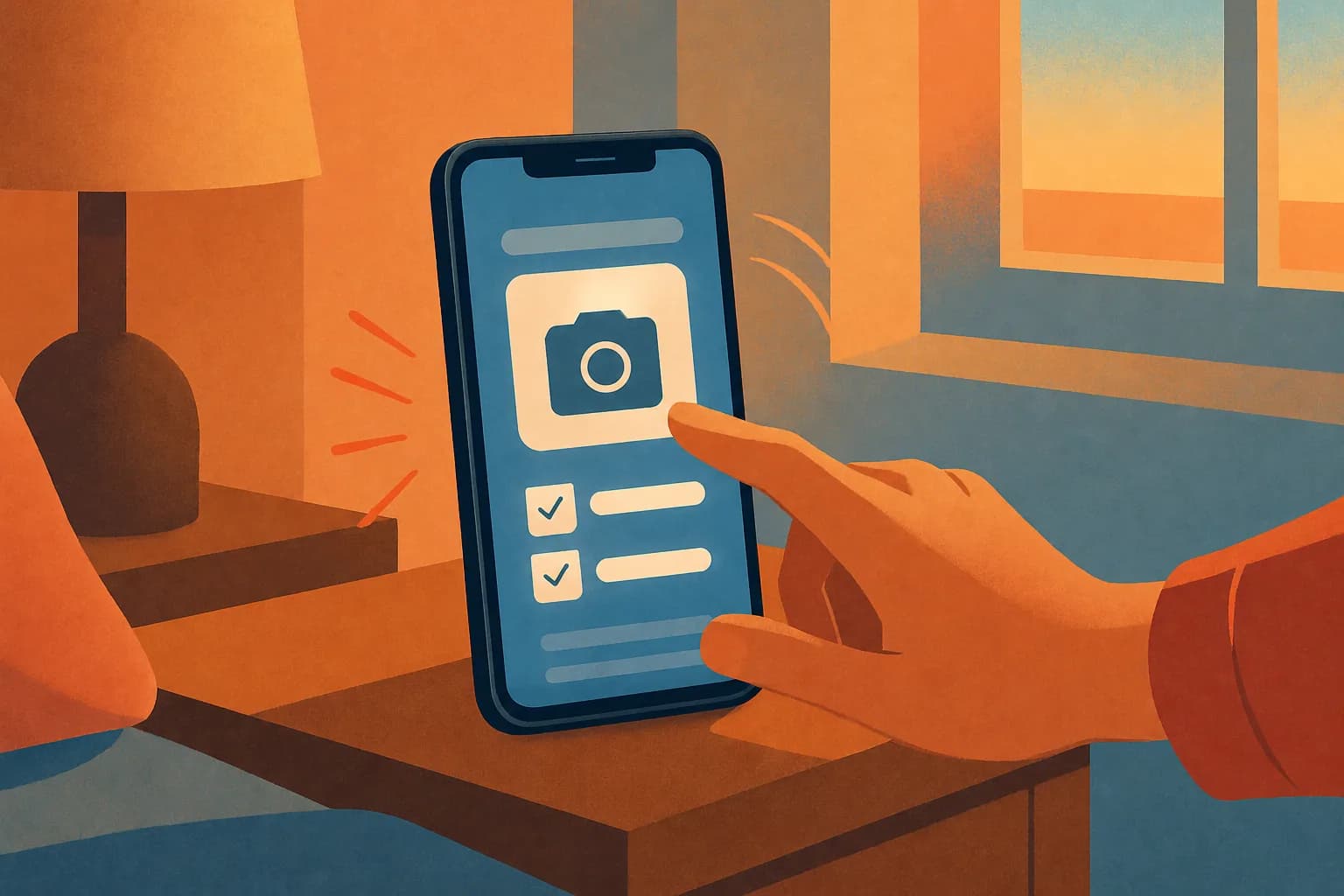
Mission-based alarms change the game by requiring you to complete a task before the alarm stops. Among all mission types, photo-based alarms stand out as particularly effective because they combine physical movement with purposeful action. Instead of solving a math problem while still in bed, you actually have to get up, walk to a specific location, and take a photo before you can silence the alarm.
This article breaks down how photo mission alarms work, why they're more effective than other alarm types, and how RiseFrst uses this approach to help you build consistent morning momentum.
Breaking the Snooze Cycle: Why Traditional Alarms Fail
Traditional alarms operate on a simple principle: make noise until someone presses a button. The problem is that your half-asleep brain becomes remarkably skilled at this single action. You can silence an alarm without fully waking up, creating what's known as the "snooze cycle"—a pattern that fragments your sleep and leaves you groggier than if you'd simply gotten up.
Research shows that the snooze habit isn't about laziness. It's about how easily your brain can dismiss the alarm while still in a sleep state. When stopping the alarm requires minimal effort and zero movement, you're essentially teaching yourself that the alarm sound means nothing urgent.
Sleep inertia—that foggy feeling when you first wake up—compounds the problem. During this transition period between sleep and wakefulness, your brain defaults to the path of least resistance. If that path is a simple button press followed by more sleep, that's exactly what you'll choose.
The solution isn't a louder alarm or more willpower. It's changing the environment so that dismissing the alarm requires genuine wakefulness and physical engagement.
The Power of Photo Mission Alarms for a Consistent Morning
A photo mission alarm transforms your wake-up routine by requiring you to photograph a pre-registered location or object before the alarm will stop. This simple requirement creates three powerful changes to your morning:
Physical distance from bed: You can't complete a photo mission while lying down. You must physically get out of bed, stand up, and walk to the registered location. This movement alone significantly reduces the likelihood of falling back asleep.
Light exposure: Walking to another room exposes you to light, which helps regulate your circadian rhythm and signals to your brain that it's time to wake up. Even in a dark apartment, the act of moving through space provides more visual stimulation than staring at your phone screen in bed.
Purposeful action: Unlike arbitrary tasks like math problems or memory games, photographing a specific object connects directly to your morning routine. When you photograph your coffee maker, you're already standing in the kitchen—the natural next step is to actually make coffee.
According to research on wake-up task effectiveness, missions that require you to be somewhere else in your home are significantly stronger than those you can complete in bed. While 51.2% of wake-up tasks are performed in bed on average, only 16.3% require getting out of bed—and those missions show dramatically better results for preventing snooze behavior.
The RiseFrst iPhone alarm app was designed specifically with this principle in mind, making photo missions a core feature rather than an afterthought.
How RiseFrst's Photo Missions Build Momentum
RiseFrst's photo mission feature works through a straightforward setup process that creates lasting morning habits:
Registration: You choose an object or location in your home and take a reference photo. This could be your bathroom mirror, kitchen counter, yoga mat, coffee maker, or even your front door. The key is selecting something that requires you to leave your bedroom.
Matching requirement: When the alarm goes off, you must walk to that location and take a new photo that matches the original. The app verifies the match, ensuring you can't simply photograph something else or use an old image.
Natural transition: Once you're standing in that location, you've already overcome the hardest part of your morning—getting out of bed. The momentum from completing the mission carries naturally into your actual routine.
This design philosophy differs from apps that pile on multiple mission types. While competitors like Alarmy offer extensive mission variety including math problems, shake tasks, and barcode scans, RiseFrst focuses on what actually works: purposeful physical movement that connects to your real morning activities.
The photo mission creates what users describe as an "initial win" for the day. You've completed a task, you're physically up, and you're positioned exactly where you need to be to continue your morning. That psychological momentum matters more than most people realize.
One RiseFrst user explained it this way: "My body is literally out of bed before my brain even catches up." That's the power of requiring physical action instead of cognitive puzzles.
Beyond the Alarm: Integrating Missions into Your Routine
The real effectiveness of a photo mission alarm comes from how you integrate it into your broader morning routine. The mission shouldn't feel like an obstacle—it should feel like the natural first step of your day.
Strategic location selection: Choose photo locations that align with your actual morning goals. If you want to exercise, photograph your workout mat or running shoes. If you want to start hydrating, photograph your water bottle in the kitchen. If you want to improve hygiene consistency, photograph your bathroom sink.
Habit stacking: The photo mission becomes an anchor for additional habits. Walking to the kitchen to photograph the coffee maker naturally leads to making coffee. Photographing your yoga mat puts you in position to actually do the yoga. This "habit stacking" approach leverages the momentum you've already created.
Consistency over intensity: You don't need to photograph something far away or complicated. The goal is consistency, not difficulty. A simple bathroom mirror works better than an elaborate setup you'll eventually abandon.
RiseFrst enhances this integration with progress tracking and streak features. You can see how many consecutive days you've successfully completed your mission, which adds another layer of motivation. Missing a day means breaking the streak—a surprisingly powerful deterrent against hitting snooze.
The app also supports flexible scheduling, so you can use photo missions on weekdays when you need structure, but switch to simpler alarms on weekends when you have more flexibility. This adaptability helps maintain the habit without creating morning resentment.
Choosing the Right Mission for Your Morning Success
While photo missions are highly effective, they work best when matched to your specific wake-up challenges and morning goals. Here's how to evaluate whether a photo mission alarm is right for you:
You're a chronic snoozer: If you regularly hit snooze multiple times, a photo mission forces you to make a real decision while actually awake. The physical movement disrupts the automatic snooze pattern.
You struggle with follow-through: If you often wake up but then lie in bed scrolling your phone, a photo mission gets you physically out of bed and positioned to start your day.
You want routine consistency: If your mornings feel chaotic or you struggle to maintain morning habits, the photo mission creates a reliable trigger point that's the same every day.
You have specific morning goals: If you want to exercise, meditate, or complete a specific morning activity, photographing the related object creates a direct connection between waking up and doing the activity.
Photo missions may be less necessary if you primarily struggle with hearing the alarm (in which case volume and alarm tone matter more) or if you share a bedroom where walking around early would disturb others.
When comparing mission types, remember that effectiveness correlates strongly with physical movement. Math missions, memory games, and typing challenges can all be completed while still in bed, making them weaker options for preventing a return to sleep. Photo missions, walking missions, and similar physical tasks require you to be somewhere else entirely.
RiseFrst's approach prioritizes this movement-based effectiveness while keeping the interface simple and focused. Rather than overwhelming you with dozens of mission options, it emphasizes the mission types that research and user behavior show actually work.
Conclusion
Breaking the snooze cycle isn't about finding a louder alarm or developing superhuman willpower. It's about changing the mechanics of how you wake up so that your half-asleep brain can't take the easy path back to sleep.
Photo mission alarms work because they require three things that naturally promote wakefulness: physical movement away from bed, exposure to environmental cues like light and space, and purposeful action that connects to your actual morning routine. By the time you've walked to the kitchen and photographed your coffee maker, you're genuinely awake—and you're already positioned to continue your morning momentum.
The key is choosing photo locations that align with your real goals, maintaining consistency even when it feels inconvenient, and recognizing that the mission itself is just the first domino. Once you're up and moving, the rest of your morning routine becomes significantly easier to execute.
Your mornings set the tone for your entire day. Starting with a small, consistent win—successfully completing your photo mission—creates momentum that carries forward into everything else you do.
Frequently Asked Questions
How does a photo mission alarm differ from a regular alarm?
A photo mission alarm requires you to walk to a specific location and photograph a pre-registered object before the alarm will stop. Unlike regular alarms that can be dismissed with a simple button press while still in bed, photo missions force physical movement and genuine wakefulness.
What should I photograph for my photo mission alarm?
Choose an object that requires leaving your bedroom and connects to your morning routine. Popular choices include bathroom mirrors, coffee makers, kitchen counters, yoga mats, or front doors. The key is selecting something that positions you to continue your actual morning activities.
Can I change my photo mission location after setting it up?
Yes, most photo mission alarm apps including RiseFrst allow you to update or change your registered photo location at any time. This flexibility helps you adjust as your routine changes or if you find a more effective location.
Are photo missions more effective than math problem alarms?
Yes, research shows that missions requiring physical movement away from bed are significantly more effective than cognitive tasks like math problems. You can solve math puzzles while still in bed, but you must physically get up to complete a photo mission, which dramatically reduces the chance of falling back asleep.
Will a photo mission alarm work if I share a bedroom?
Photo missions can work in shared bedrooms, but require consideration for your partner. Choose a photo location that's relatively close and quiet to reach, and communicate with your partner about your wake-up routine. Some couples find that consistent timing makes the routine predictable and less disruptive.
Ready to break the snooze cycle and build real morning momentum? Download RiseFrst and set up your first photo mission alarm. Choose a location that matters to your routine, commit to seven consecutive days, and experience how physical movement transforms your mornings. Your first consistent week starts tomorrow.