

August 21, 2026 · RiseFrst
Smart Alarm Clock for iPhone: Wake Up Right with RiseFrst
Transform your mornings with a smart alarm clock for iPhone. Break the snooze cycle with mission-based alarms and build consistent routines that stick.
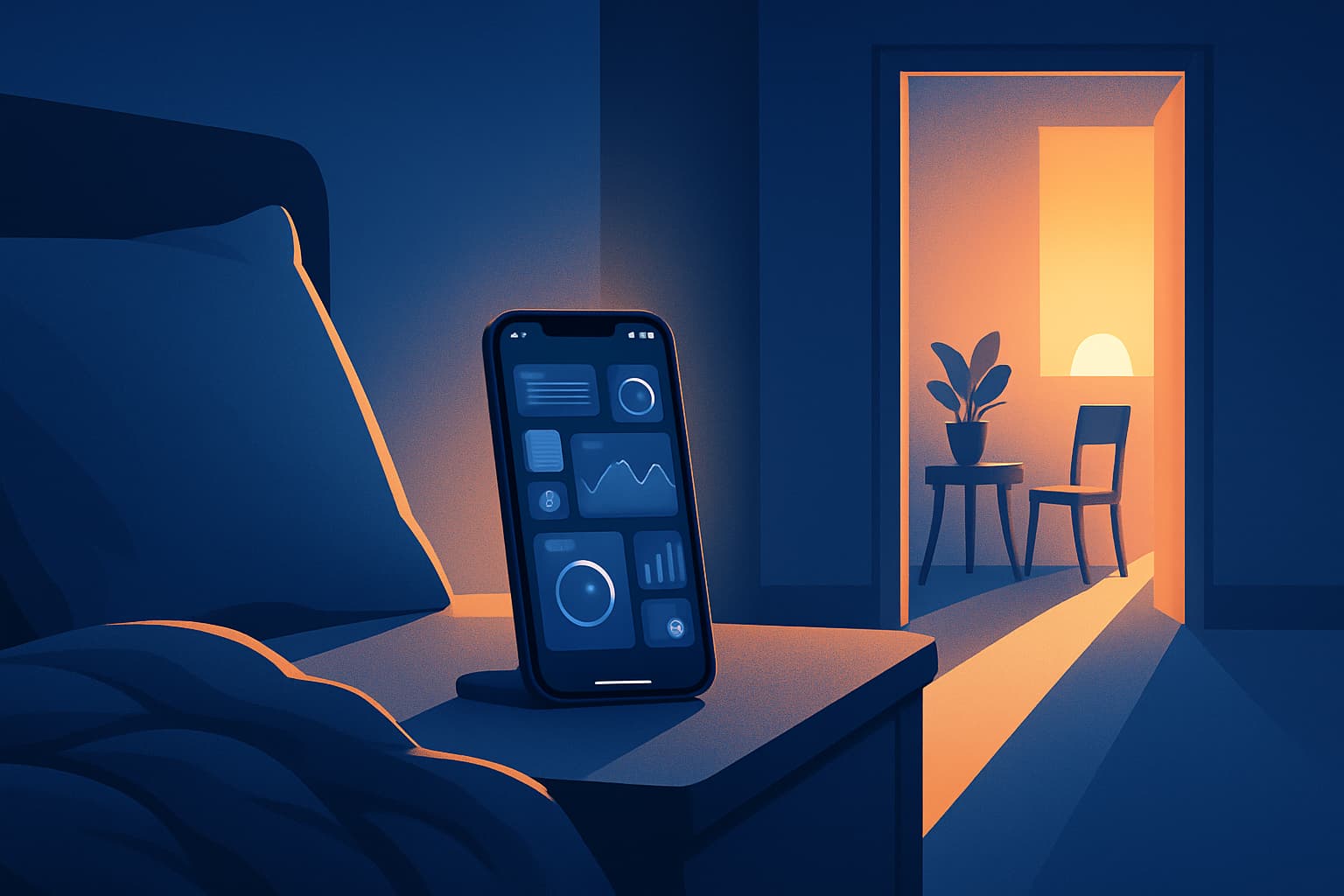
Experience the Smart Alarm Clock for iPhone: RiseFrst
Your iPhone's standard alarm gets you out of bed—or does it? If you're like countless others, that familiar chime becomes nothing more than a signal to tap 'snooze' one more time. Before you know it, you've lost thirty minutes of your morning, and your entire day starts behind schedule.
The truth is, waking up isn't the real challenge. The challenge is actually getting up, staying up, and starting your day with intention and momentum. That's the difference between a basic alarm and a smart alarm clock for iPhone—one simply makes noise, while the other becomes your partner in building the consistent, productive mornings you've been chasing.
If you've struggled with oversleeping, battled the snooze button, or watched your morning routine plans crumble day after day, you're not facing a willpower problem. You're facing a tool problem. Your mornings deserve more than a sound that's easy to ignore.
Beyond the Beep: Why Your iPhone Needs a Smart Alarm
The default iPhone alarm works perfectly—if all you need is a noise at a specific time. But here's what it can't do: it can't force you to get out of bed, it can't guide you through your first crucial morning actions, and it certainly can't help you build the consistency that transforms occasional good mornings into a sustainable habit.
Research on habit formation shows that the first action you take in the morning sets the tone for everything that follows. When that first action is repeatedly hitting snooze, you're training your brain that your commitments to yourself are negotiable. Each snooze reinforces a pattern of delay and avoidance that extends beyond your bedroom.
A true smart alarm clock for iPhone addresses this at the root. Instead of relying on your groggy willpower to make the right choice, it removes the choice entirely. By requiring specific actions before the alarm stops, you're physically moving, mentally engaging, and—most importantly—already out of bed before you've had time to rationalize staying there.
The psychological shift is powerful. You're no longer fighting yourself each morning. Instead, you're following a system that's designed to work with your brain's natural resistance to change, not against it.
The Real Cost of Hitting Snooze
Studies have shown that those extra minutes of fragmented sleep don't provide rest—they actually leave you groggier. When you hit snooze, you're starting a new sleep cycle that you won't complete, leading to what sleep researchers call 'sleep inertia.' You end up feeling worse than if you'd simply gotten up at the first alarm.
Beyond the immediate grogginess, the snooze habit chips away at your self-trust. Each morning you tell yourself 'just five more minutes' and then fail to honor your original wake-up time, you're undermining your confidence in your ability to stick to your plans. This erosion of self-trust doesn't stay confined to mornings—it seeps into other areas where consistency matters.
Breaking the Snooze Cycle: How Mission-Based Alarms Transform Mornings
Mission-based alarms represent a fundamental reimagining of what an alarm should do. Instead of a passive sound that waits for you to dismiss it, a mission-based alarm requires you to complete a specific task—a mission—before it will turn off.
With RiseFrst | iPhone alarm app with mission-based alarms, your morning mission might be taking a photo of your coffee maker, your sneakers, or your bathroom sink. This simple requirement accomplishes something profound: it gets you physically out of bed and moving toward the space where your morning routine happens.
The genius isn't in the complexity—it's in the certainty. There's no bargaining with a mission-based alarm. You can't tap a button and drift back to sleep. Your brain, even in its sleepy state, recognizes that the path of least resistance is simply getting up and taking the photo. Once you're up and moving, the hardest part is already done.
Choosing Missions That Work for You
The most effective missions are:
- Physically accessible but not too close: Your bathroom or kitchen works better than something right next to your bed
- Connected to your next action: Taking a photo of your workout clothes naturally leads to putting them on
- Consistent: Using the same target photo each day builds a reliable pattern
- Simple enough for your groggiest state: You don't need cognitive challenges when you can barely open your eyes—you need physical movement
The mission isn't meant to be a punishment or a test of intelligence. It's a bridge between sleep and your actual morning routine, designed to be just challenging enough to ensure you're genuinely awake when you cross it.
Crafting Your Consistent Morning: The Power of Routine Building
Waking up is step one. What happens in the next thirty to sixty minutes determines whether your day unfolds with momentum or feels like you're constantly playing catch-up.
Research on morning routines consistently shows that people who follow a structured morning sequence report higher productivity, better mood regulation, and greater feelings of control throughout their day. The routine provides a foundation of certainty in an otherwise unpredictable world.
But here's the challenge: knowing you should have a morning routine and actually maintaining one are entirely different things. That's where a smart alarm clock for iPhone with integrated routine building becomes invaluable.
RiseFrst's routine builder doesn't just wake you up—it walks you through your morning, step by step. After completing your wake-up mission, you're guided through the sequence you've designed: hydration, movement, mindfulness, planning, or whatever actions you've identified as most important for your successful start.
Building Routines That Actually Stick
The key to sustainable morning routines is starting smaller than you think necessary. Your ambitious brain wants to wake up at 5 AM for meditation, journaling, a workout, and a healthy breakfast. Your actual brain, especially in week one, just needs to consistently get up and drink a glass of water.
Start with:
- One non-negotiable action beyond getting out of bed (drinking water, stepping outside, five minutes of movement)
- A realistic timeframe (fifteen minutes, not ninety)
- Consistency over perfection (the same basic routine seven days a week builds the habit faster than an elaborate routine you only manage twice)
As your consistency builds, your routine naturally expands. What started as 'get up and drink water' becomes 'get up, drink water, and do ten push-ups,' which eventually becomes a full morning practice you look forward to. But it all starts with protecting that first small win.
Tracking Your Triumph: Celebrating Progress and Building Momentum
Consistency is invisible until you make it visible. You might feel like you're failing at your morning routine because you remember the two days you snoozed through your alarm, while completely overlooking the five days you got up successfully. Your brain's negativity bias is working against you.
Progress tracking transforms your subjective feelings into objective reality. When you can see that you've successfully completed your morning routine twelve days out of the past fourteen, that's not failure—that's an 85% success rate and a clear upward trend.
RiseFrst's streak tracking serves multiple purposes:
- It provides immediate positive feedback when you complete your mission and routine
- It shows you patterns in when you're most successful and where you struggle
- It gamifies consistency in a healthy way, where you're competing only with your past self
- It creates a visual representation of the identity you're building: someone who shows up for themselves every morning
The Power of the Streak
There's psychological magic in maintaining a streak. After three days, you have a pattern. After seven, you have a week. After thirty, you have a month-long proof of your capability. Each morning, the choice isn't just 'do I get up today?' but 'do I maintain this streak I've worked hard to build?'
The streak isn't about perfection—it's about momentum. Even if you miss a day, the data shows you what you're capable of, and you can start building again immediately. You're not back at zero; you're someone who's proven they can string together successful mornings, and you're simply continuing that pattern.
Choosing Your Morning Ally: What to Look for in an iPhone Smart Alarm
Not all alarm apps are created equal, and not every feature list translates to actual behavior change. When evaluating a smart alarm clock for iPhone, look beyond the marketing to what actually matters for building consistent mornings.
Essential Features
Mission-based wake-up tasks: The alarm should require genuine action to dismiss, not just tapping a button or solving a simple math problem that becomes automatic after a few days.
Routine integration: Waking up is the beginning, not the end. Look for apps that guide you through your complete morning sequence, not just the wake-up moment.
Flexible scheduling: Your Monday morning might need to look different from your Saturday morning. Effective apps let you customize alarms for weekdays, weekends, or specific focused mornings without managing multiple separate alarms.
Progress visibility: You need to see your consistency to maintain it. Streak tracking and success metrics should be clear and encouraging.
Reliability: This sounds obvious, but your alarm needs to work every single time. Check reviews for reliability issues before trusting an app with your wake-up time.
What RiseFrst Brings Together
RiseFrst combines all these elements in an approach specifically designed for building momentum. The photo-based missions are simple but effective—you can't fake being in your kitchen when you're still in bed. The routine builder helps you structure those crucial first actions. The progress tracking celebrates your consistency and helps you identify patterns.
Most importantly, RiseFrst understands that the goal isn't just waking up—it's starting your day with intention and building the kind of consistent momentum that transforms not just your mornings, but how you show up in every area of your life.
Beyond Features: The Right Mindset
Even the smartest alarm clock for iPhone won't work if you're still treating your morning as negotiable. The tool provides structure and removes friction, but you provide the commitment to your own growth.
Approach your new alarm system with this mindset: You're not fighting yourself or forcing yourself to do something you hate. You're simply removing the moment of negotiation that your sleepy brain isn't equipped to handle well. You're making it easier to be the person you've decided you want to be.
The first few mornings might feel challenging—any change does. But somewhere around day five or seven, something shifts. You stop thinking of the alarm as an enemy and start recognizing it as exactly what it is: a tool that helps you honor the commitments you've made to yourself.
Building Your Momentum Starts Tomorrow Morning
Your morning routine doesn't need to be perfect. It needs to be consistent. You don't need to wake up at 4 AM or meditate for an hour or follow someone else's Instagram-worthy routine. You need to wake up when you planned to wake up, do the things you've identified as important for your successful start, and do it again tomorrow.
Every morning is an opportunity to build evidence that you're someone who follows through. That you're someone who shows up for themselves. That you're someone who's building momentum, one consistent morning at a time.
A smart alarm clock for iPhone isn't about fancy technology or complicated features. It's about removing the barriers between your intentions and your actions. It's about making the right choice the easy choice, especially in those vulnerable first moments of your day.
Your mornings set the tone for everything that follows. When you start with consistency, intention, and momentum, that energy carries through. The meetings feel more manageable. The challenges feel more approachable. The entire day unfolds differently because you began it as the person you're becoming, not the person you used to be.
Your Next Step
You already know what you need to do tomorrow morning. You've known for a while. The only question is whether you'll have the right tools to make it happen.
Your consistent mornings are waiting. Your momentum is ready to build. Everything you want to accomplish starts with showing up for yourself when it matters most—in those first crucial minutes after your alarm goes off.
The tool is ready when you are.
Frequently Asked Questions
What makes a smart alarm clock for iPhone different from the default alarm?
A smart alarm clock requires you to complete specific tasks (like taking a photo or completing a mission) before it will turn off, ensuring you're physically out of bed and mentally engaged. It also typically includes routine building and progress tracking features that help you build consistent morning habits beyond just waking up.
How do mission-based alarms help me stop hitting snooze?
Mission-based alarms require physical action—like walking to another room and taking a photo—before they'll turn off. This removes the option to simply tap snooze while still in bed. By the time you've completed the mission, you're already up and moving, making it much easier to continue into your morning routine.
Can I set different alarms for weekdays and weekends?
Yes, quality smart alarm apps like RiseFrst allow flexible scheduling for weekdays, weekends, and specific focused mornings. This lets you maintain consistency in your wake-up approach while adapting to your actual schedule needs.
Will a smart alarm clock actually help me build a morning routine?
A smart alarm with routine building features guides you through your planned morning actions step-by-step, making it much easier to maintain consistency. Combined with progress tracking that shows your success rate, these tools provide both structure and motivation that significantly increase the likelihood of sustaining your routine.
What should my first mission-based alarm task be?
Choose something physically accessible but not right next to your bed—like your bathroom sink or coffee maker. The task should be simple enough to complete even when groggy (taking a photo works well) but far enough that you have to actually get out of bed and start moving toward where your morning routine happens.
Ready to transform your mornings? Download RiseFrst and experience how mission-based alarms and routine building create the consistency you've been searching for. Your first successful streak starts tomorrow morning.