

August 10, 2026 · RiseFrst Team
Why Your Morning Starts Before the Alarm
A calmer morning is usually designed the night before. Here is a simple way to make your first few minutes easier to follow through on.
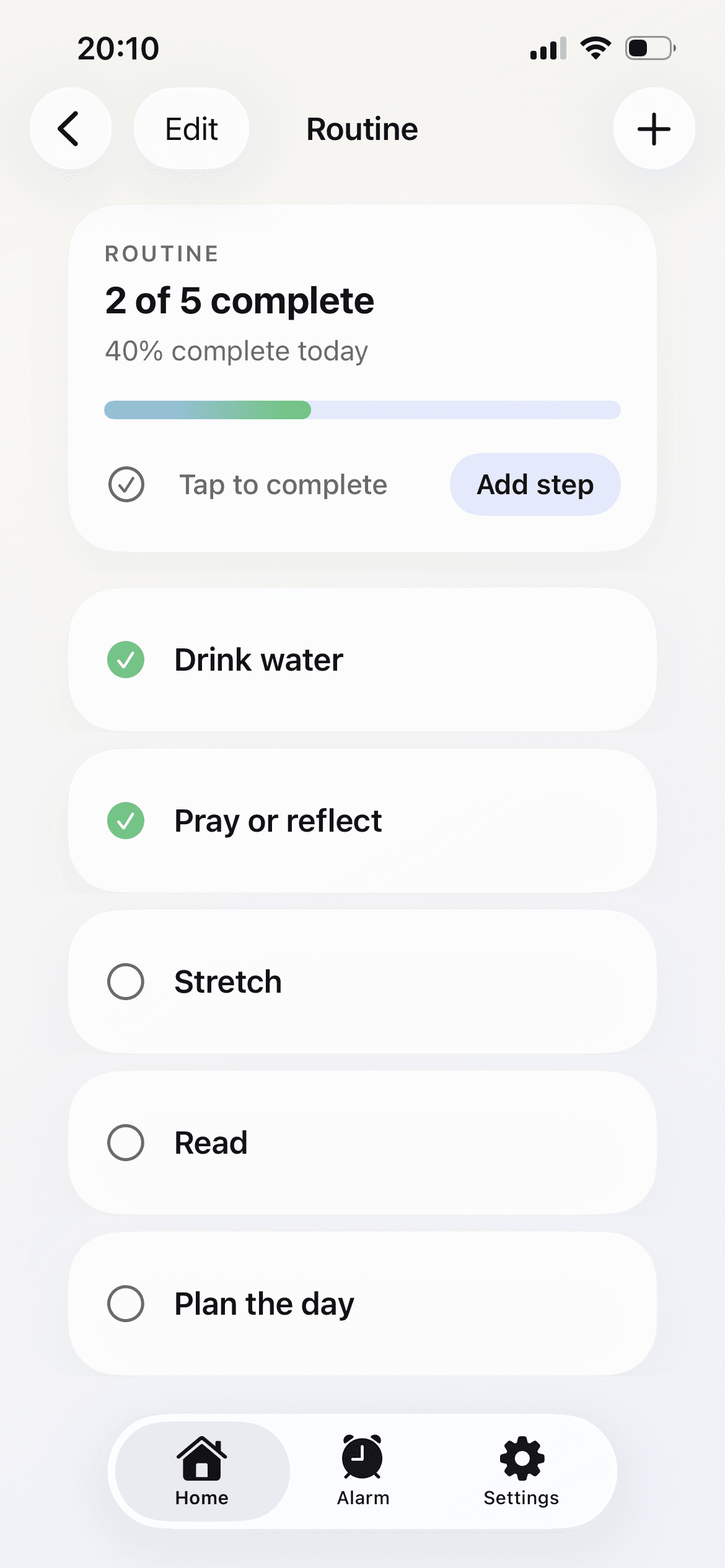
The first decision of your day is often made before you go to sleep. When the alarm rings, your tired brain should not have to invent a plan from scratch. A calmer morning is less about having extraordinary discipline and more about removing a few decisions from the first ten minutes.
Design the night-before handoff
Your evening setup does not need to become another elaborate routine. Think of it as leaving a trail of obvious next actions for the version of you who is still half asleep.
Before bed, choose three things:
- A starting position: decide where your phone, alarm, water, and clothes will be.
- A first physical action: choose something that gets you upright, such as opening the curtains or walking to the kitchen.
- A first useful outcome: decide what “started” means, such as finishing a glass of water or opening your work notebook.
This is a small version of an implementation intention: when the alarm rings, I will do this action in this place. The more specific the plan, the less room there is for a sleepy debate about whether to snooze.
Make the next action obvious
A useful morning system is small enough to remember and specific enough to start. Try writing down three actions for tomorrow:
- Stand up and put both feet on the floor.
- Complete one physical reset, such as drinking water or opening the curtains.
- Start the first meaningful task before checking your notifications.
The goal is not to build a perfect routine. It is to reduce the number of decisions between waking up and getting momentum. If your morning currently feels chaotic, start with a sequence that takes five minutes. You can add more once the handoff feels reliable.
Consistency gets easier when the next good action is already waiting for you.
Build a ten-minute morning handoff
Here is one example of a short routine that gives the morning shape without filling the entire hour:
- Minute 1: turn off the alarm and stand up.
- Minutes 2–3: complete a wake-up mission and drink water.
- Minutes 4–6: wash your face, stretch, or step outside for fresh air.
- Minutes 7–10: review the day and choose the first task you will begin.
Notice what is missing: a long list of habits, a complicated productivity system, and the expectation that you will feel motivated immediately. The routine only needs to move you from sleep into a state where making the next decision is easier.
Give your alarm a job
An alarm can be more than a sound. In RiseFrst, a wake-up mission turns the moment you get up into a small proof of movement. A photo of your running shoes, coffee, or the morning sky can make the transition feel concrete.
You can think of the routine as a short function:
function startMorning(alarmTime: string) {
  wakeUp(alarmTime);
  completeMission();
  beginRoutine();
}
The code is simple because the idea is simple: create a reliable handoff from sleep to action. A mission is not meant to punish you. It is a bridge between hearing the alarm and remembering why you wanted to get up.
Make the routine forgiving
The strongest routine is not the one that only works on an ideal day. Create a “minimum version” for mornings after poor sleep, a late night, or an unexpected schedule change. That version might be standing up, opening the curtains, drinking water, and choosing one priority.
Keeping the minimum version visible protects your consistency. You are allowed to do less without doing nothing. When the routine is flexible enough to survive an imperfect day, it becomes easier to return to the full version tomorrow.
It also helps to delay notifications until after the first action is complete. Messages and feeds are designed to create their own priorities. Give your morning a few quiet minutes to establish yours first.
Review the system once a week
If a routine is not working, treat that as useful information rather than a character flaw. Ask:
- Which step creates the most hesitation?
- Is the mission too difficult or simply too far away?
- What would make the first action easier to see and start?
Change one variable at a time. Move the water closer, shorten the routine, or choose a more obvious mission. Small adjustments are easier to evaluate than a complete reset.
For more ideas, explore the RiseFrst app and choose one small action to repeat tomorrow.